CLIENT
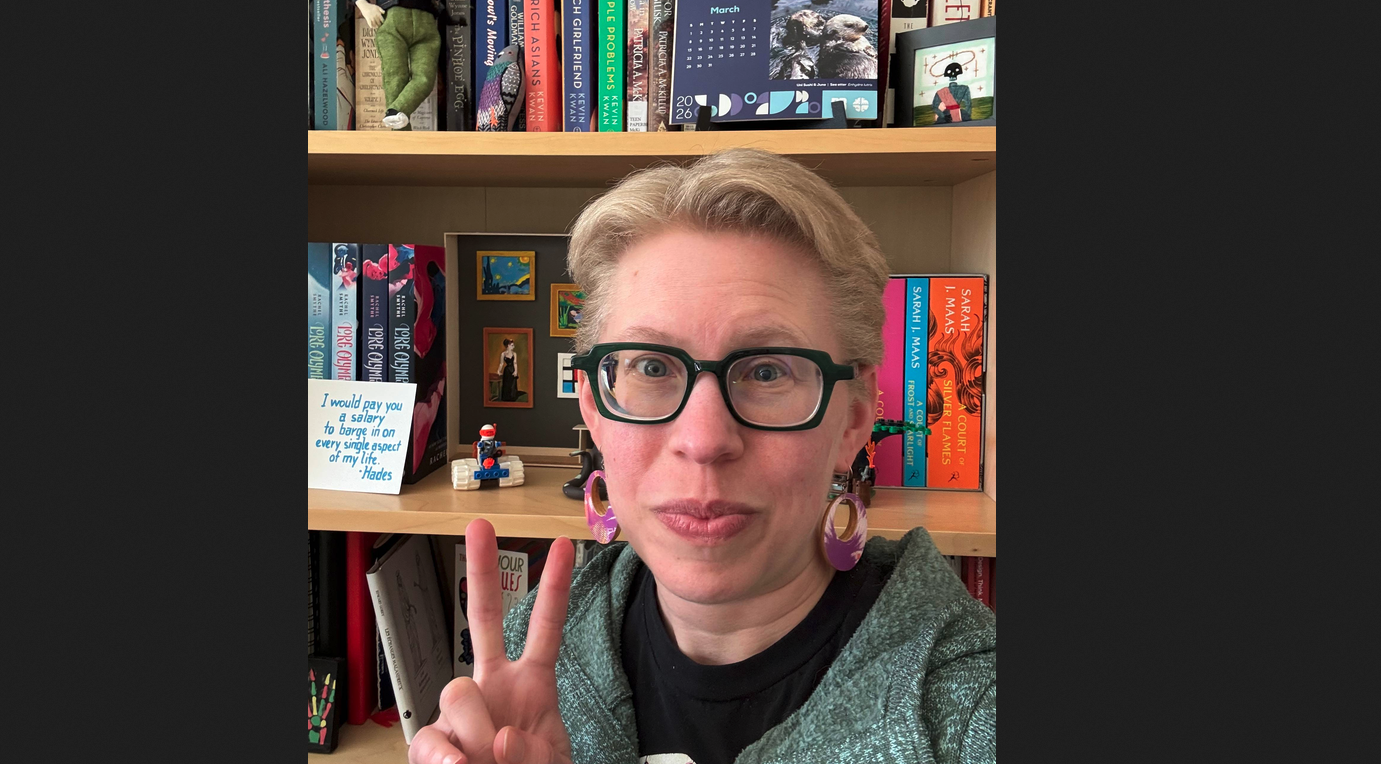
Megan Eckman / PDX Spellbound
ENGAGEMENT
Q4 2025–Present
SMG ROLE
Fractional Talent Management
Product Development
Audience Strategy
CHANNELS
Email
Social
Video
Education
Events
STATUS
Active Development
MEGAN ECKMAN / PDX SPELLBOUND
She thought she needed to monetize.
First, she needed something to monetize.
Megan Eckman came to SMG with a delightfully contrarian idea:
Why shouldn't an author get paid while she's still writing the novel?
She had started developing PDX Spellbound, a collection of cozy romantic short stories connected to a larger novel in progress. The stories could generate revenue while she wrote... and, just as importantly, help her build the email audience she'd eventually need for the novel's launch.
There was only one problem.
At the beginning of the engagement, Megan had one finished short story, fewer than 100 active email subscribers, roughly 100 social followers, and $0 in sales.
The monetization strategy wasn't the first problem.
The product was.
1 STORY → 12-STORY PRODUCT → 925 EMAIL SUBSCRIBERS → MULTIPLE REVENUE PATHS
THE STARTING POINT
You cannot monetize an idea.
Megan already had a world.
A half-finished novel.
One completed short story.
A growing list of future story ideas.
A website, a Kit account, and a small social presence.
She also discovered something potentially useful... an old email list from a previous business.
But old contacts aren't automatically an audience for a new one. Consent, deliverability, audience fit, and trust still matter.
So we didn't start by throwing an offer at everyone Megan had ever emailed.
We started by finishing the thing people would eventually be asked to buy.
Twelve stories. One year. One new story every month.
Megan wrote every story herself.
Then, while she finished the collection, SMG began designing the commercial infrastructure around it.

You can build infrastructure while you're still creating.
But eventually... you have to finish the product.
SMG worked with Megan to turn the short-story collection into a simple paid product.
Readers could enter through a free story, then continue receiving one new installment each month for $7/month, with the first month free.
The price was intentionally accessible.
Early revenue mattered.
But something else mattered more.
Who would pay?
A small group of recurring subscribers could identify the readers most invested in Megan's work long before the novel was ready to launch.
Those readers weren't merely customers.
They were early evidence of a future launch audience.
SMG advised on the subscription structure, SaaS stack, pricing, free-versus-paid boundary, publishing cadence, audience journey, automation architecture, sales language, and product experiments.
Megan wrote the stories.
Megan wrote the emails.
Megan created the brand.
Megan built the thing.
The stories needed a business model.
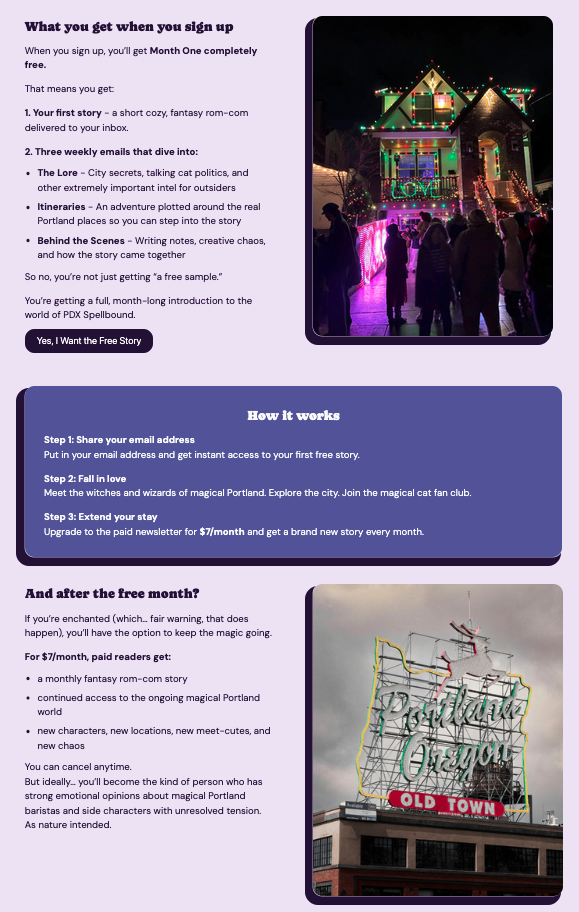
PDX SPELLBOUND · PAID STORY SERIES
A creative project became a recurring product designed to generate revenue, identify superfans, and build toward a future novel launch.
A product sitting on the internet is not a sales system.
SMG mapped the journey from discovering Megan to becoming a reader... and from becoming a reader to becoming a paying subscriber.
That meant keeping the system intentionally simple:
DISCOVERY
↓
FREE STORY / EMAIL OPT-IN
↓
NURTURE
↓
PAID STORY SERIES
↓
READER RELATIONSHIP
↓
FUTURE NOVEL LAUNCH
We built and refined the Kit automations supporting that journey, including subscriber onboarding, nurture, paid conversion, and cancellation behavior.
Not because Megan needed an elaborate marketing machine.
Because she needed a system she could actually operate.
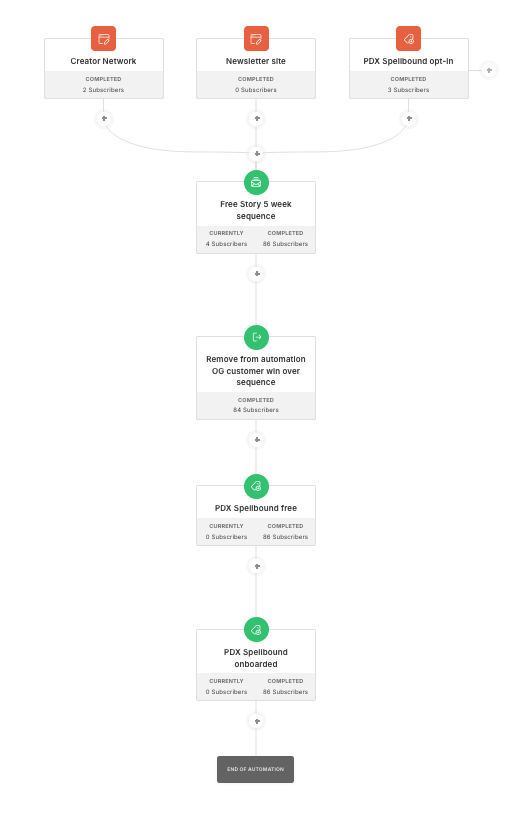
AUDIENCE INFRASTRUCTURE
The system was designed around Megan's actual capacity... simple enough to maintain, structured enough to grow with her.
The best system isn't the fanciest one.
It's the one the creator will actually use.
THEN WE FOUND THE REAL BOTTLENECK
You can't sell without people to sell to.
Once the product and infrastructure existed, the next problem became obvious.
Megan needed more people.
Not random followers.
Not vanity numbers.
Potential readers and buyers.
Growing an owned audience from scratch in 2026 is slow work. So Megan began doing something she'd historically found much less comfortable: showing up.
She started participating in communities.
Guesting on podcasts.
Collaborating with local creators.
Publishing more consistently on social media.
And making herself easier to discover.
<100
active email subscribers at baseline
~100 → 300+
personal Instagram following
0 → 100+
PDX Spellbound Instagram following
5
early vending workshop purchases
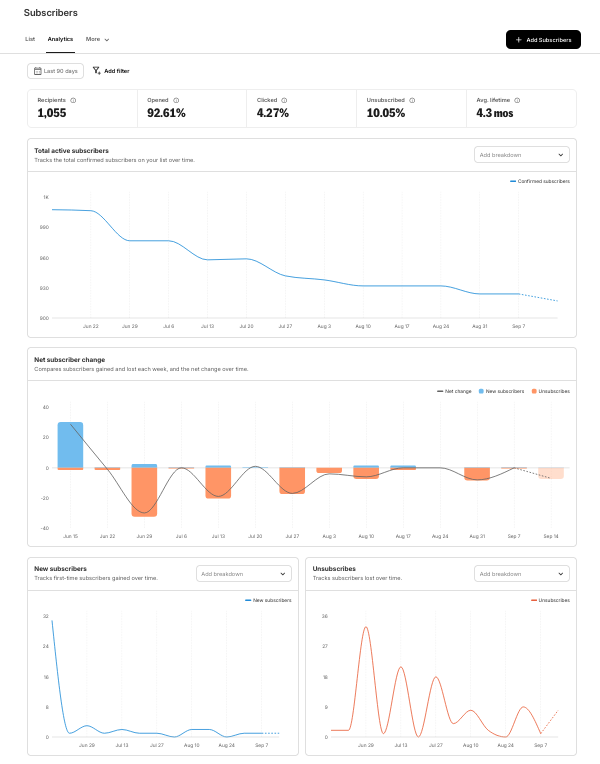
925
email subscribers by September 2026
10
recurring paid story subscribers
1
known paid-story cancellation to date
Megan didn't need to become an influencer.
She needed to become findable.
For a creator with a small audience, showing up when very few people are watching can feel spectacularly pointless.
It isn't.
Visibility creates opportunities for the right people to recognize that you exist.
Megan began batching short-form video around PDX Spellbound using frameworks developed inside the Dojo.
Then she did something more important.
She used the framework without us.
She created a second 30-day batch around another area of expertise.
She began guesting on podcasts, collaborating with creators, participating in relevant communities, and getting increasingly comfortable letting people see what she knows.
The goal was never to turn Megan into someone louder.
It was to make more of Megan visible.
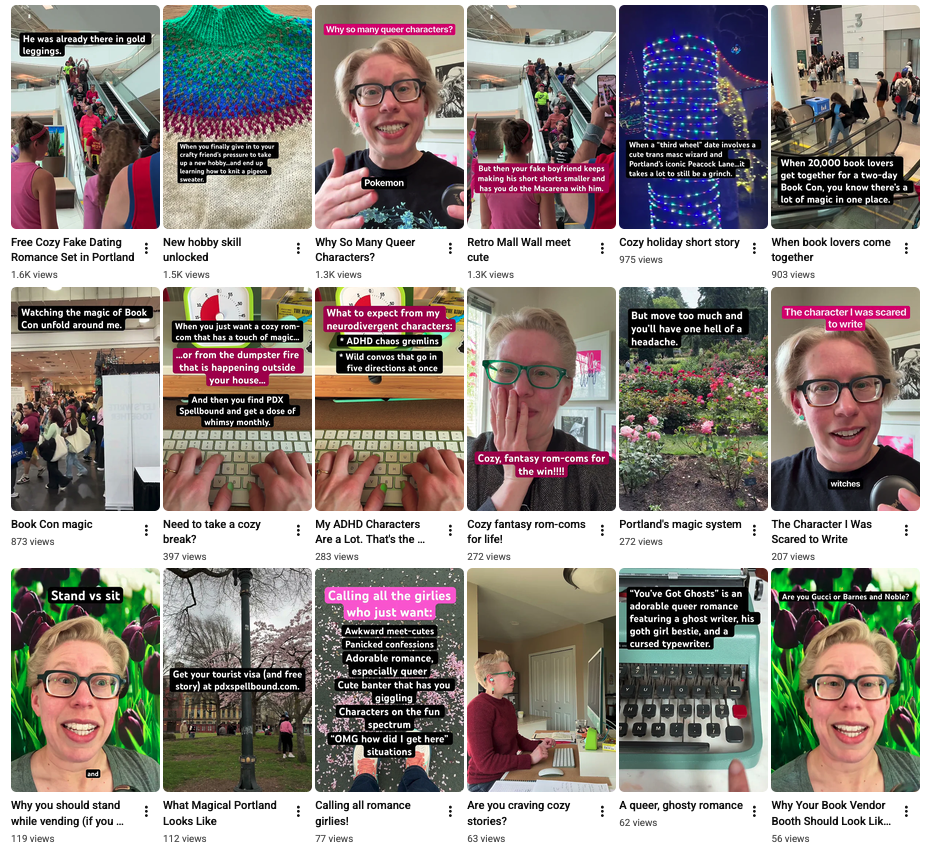
VISIBILITY AS PRACTICE
Megan didn't need a new personality for social media. She needed enough repetition to stop treating visibility like a special occasion.
THE PLOT TWIST
The product wasn't the only thing worth selling.
In spring 2026, Megan and SMG founder Mary Williams traveled to BookCon in New York for market research.
The convention floor was packed with 25,000 authors & readers. Not to mention merchandise, elaborate displays, long lines, costumes, and approximately nine billion competing attempts to get someone's attention.
Mary was cooked within hours.
Megan was having the time of her life.
Because before Megan became a design strategist and romance author, she'd spent roughly a decade running a successful product-based embroidery-kit business.
She knew how to vend.
On the way home, standing in the TSA line at JFK, Megan began dissecting what she'd seen authors doing at their booths... what worked, what didn't, what they were overlooking, and what she would have done differently.
And suddenly the conversation changed.
What if one of Megan's most valuable products wasn't fiction?
What if it was something she'd already spent a decade learning how to do?
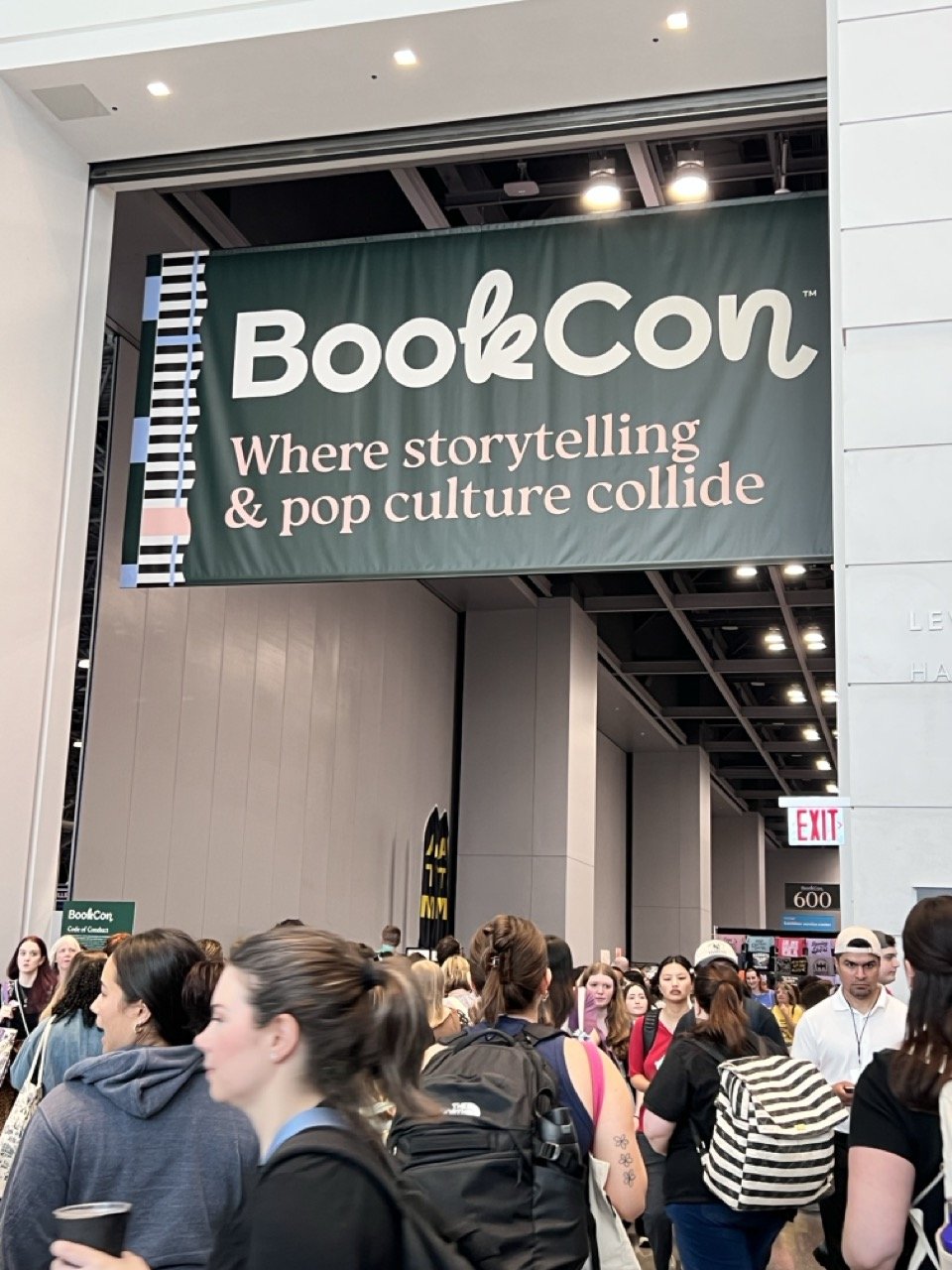
Sometimes your next offer isn't hiding in what you're learning.
It's hiding in what you forgot you already know.
THE OLD BUSINESS WASN'T IRRELEVANT
It was intellectual property.
Megan understood physical products.
Booth design.
Merchandising.
Customer behavior.
Event selection.
Product assortment.
Pricing.
Displays.
The thousand tiny decisions separating “I rented a table” from “I know how to sell at an event.”
Those skills hadn't disappeared when she closed her embroidery-kit business.
They'd simply stopped looking relevant.
SMG helped Megan recognize that her previous experience could become a new commercial asset... particularly as authors increasingly sell books and merchandise through expos, conventions, markets, and reader events.
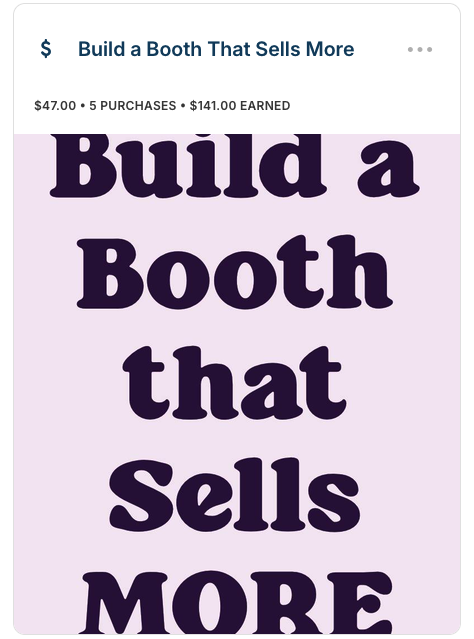
So Megan developed an evergreen vending workshop.
Early result:
5 workshop purchases.
Not enough data to declare victory.
More than enough to prove someone will pay.
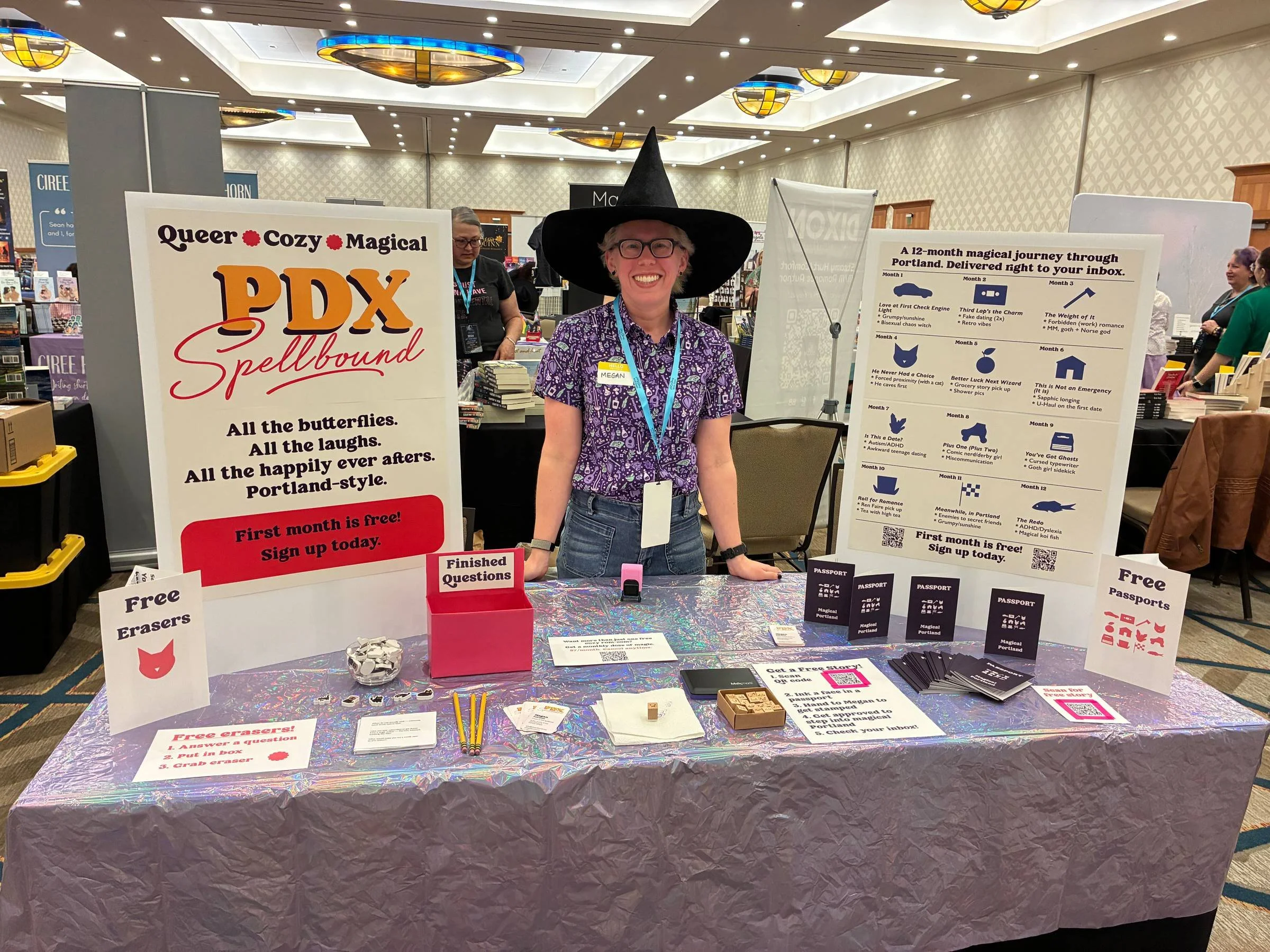
A DECADE OF PRODUCT EXPERIENCE
What looked like an old chapter of Megan's career became a new source of authority.
Five sales don't tell us the size of the market.
They tell us there is one.
The first vending workshop generated five purchases.
That's early validation.
Now the work becomes determining who values the expertise most.
Individual authors?
Author groups?
Conferences?
Event organizers?
Publishers?
Creative-business communities?
The offer may be right while the audience around it is still too small... or the strongest buyer may turn out to be B2B rather than individual creators.
That's why early-stage product development is less about declaring something a success or failure and more about asking increasingly useful questions.
Don't kill the offer before you've tested the market around it.
THEN THE MARKET STARTED ANSWERING BACK
In late 2026, Megan was accepted to vend at Crafty Wonderland's Portland holiday market, giving her an opportunity to test PDX Spellbound directly with a large in-person audience.
The market requires physical products.
So Megan adapted.
Her digital stories are becoming printed story anthologies... creating another useful experiment:
Do Megan's readers prefer these stories digitally or physically?
Print costs more to produce.
It can also support higher per-unit pricing, gifting, collecting, and a completely different buying experience.
Meanwhile, Megan is scheduled to teach vending to authors at a 2027 romance event.
The expertise that once looked unrelated to her author business is now creating its own commercial path.
Megan's vending expertise began creating opportunities.
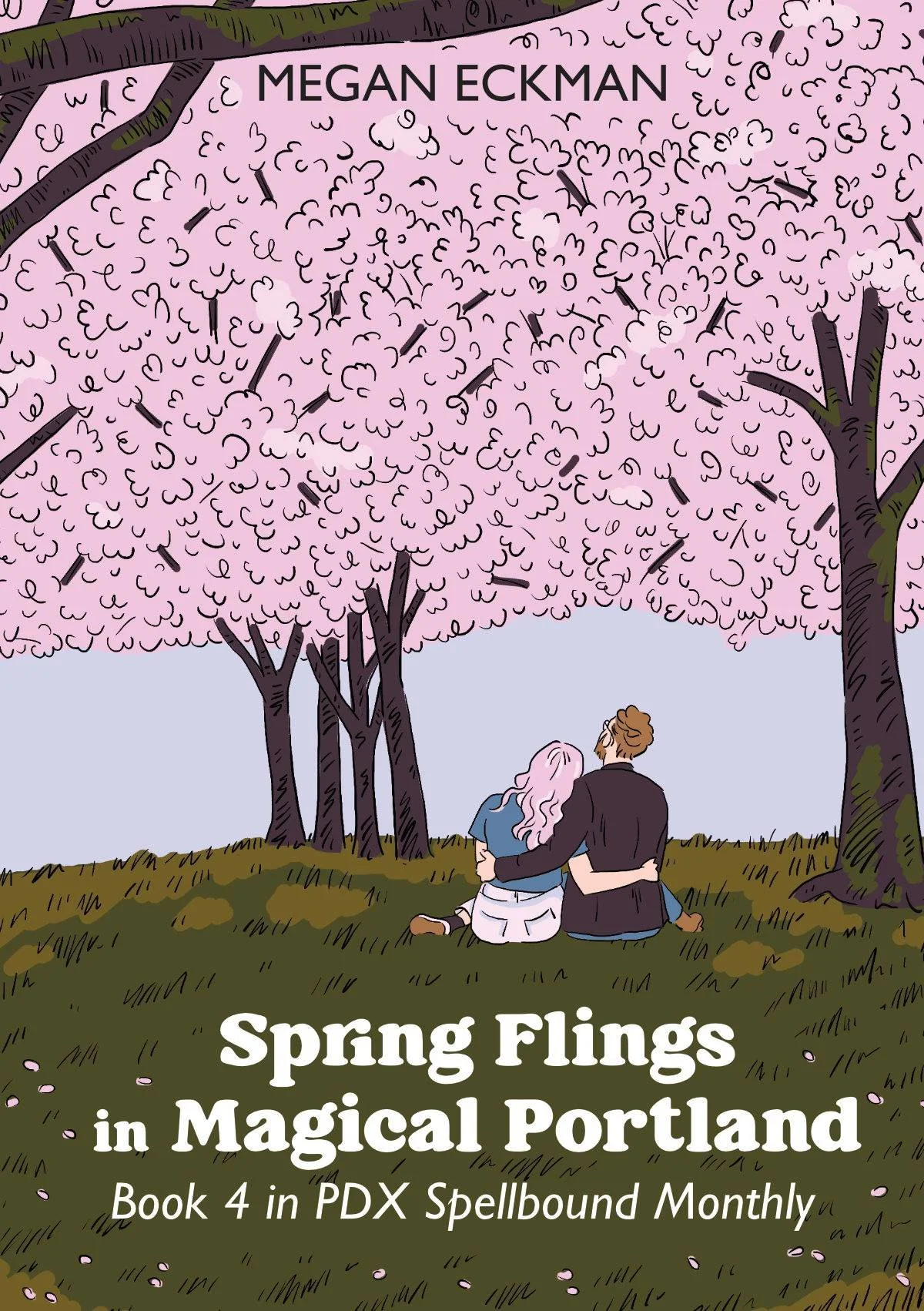
ACTIVE PRODUCT DEVELOPMENT · Q4 2026
Digital subscription or physical product? Consumer workshop or B2B education?
The next phase is designed to generate the data required to answer those questions.
THE STUDIO ECOSYSTEM CREATED ANOTHER PRODUCT
Sometimes the opportunity exists between two people.
Megan's development inside SMG also created an unexpected collaboration with fellow SMG talent Veronica Yanhs of Desires Laid Bare.
Megan had something Veronica didn't:
Access and credibility inside author communities.
Veronica had something Megan didn't:
Deep expertise in kink, sexuality, safety, and consent.
Together, that created a completely different education opportunity.
A workshop for romance authors writing kink and dark-romance tropes who need a stronger understanding of real-world safety, consent, and the practices they're putting on the page.
The initial response surfaced a problem bigger than marketing:
Some writers didn't need help explaining the trope.
They needed help understanding the consent underneath it.
A pilot audience has already been identified through a private romance-writing community.
Currently in development.
A good talent ecosystem doesn't just support existing opportunities.
It creates combinations that couldn't exist before.
WHAT SMG ACTUALLY DOES
Megan does her own doing.
This distinction matters.
SMG does not write Megan's stories.
We don't write her nurture emails.
We don't create her branding.
We don't make her social content.
We don't book her guests.
We don't operate PDX Spellbound behind the scenes.
Megan does.
SMG provides the development environment around her:
PRODUCT DEVELOPMENT
Offer architecture · pricing · validation · experimentation
SYSTEMS & OPERATIONS
SaaS decisions · automation architecture · customer journey · troubleshooting
MONETIZATION STRATEGY
Paid stories · workshops · physical products · B2B possibilities
ECOSYSTEM DEVELOPMENT
Introductions · collaborations · complementary expertise · new IP
AUDIENCE STRATEGY
Email growth · discoverability · buyer readiness · community participation
VISIBILITY DEVELOPMENT
Content frameworks · batching systems · collaborations · guest appearances
TALENT DEVELOPMENT
Judgment · capacity planning · confidence · creative decision-making · execution
FRACTIONAL TALENT MANAGEMENT
The ongoing strategic layer connecting all of it.
The goal isn't to make talented people dependent on us.
It's to make them increasingly capable without us.
The biggest change isn't visible in a dashboard.
Over the course of the engagement, Megan's judgment changed.
She became more selective about opportunities.
More realistic about capacity.
Better at separating an interesting idea from an idea that needs to happen now.
More comfortable selling.
More precise about who her buyers actually are.
More willing to participate publicly without trying to perform somebody else's version of visibility.
And much less likely to interpret an early lack of traction as proof that the entire idea doesn't work.
Some ideas belong in production.
Some belong in testing.
Some belong on the later list.
That's development too.
Faster isn't always better.
Sometimes moving too quickly means blowing straight past the opportunity you haven't learned to recognize yet.
THE PODCASTING BUG
Then Megan wanted another podcast.
Megan had previously co-hosted The Awkward Handshake with Mary.
She enjoyed it enough that eventually she wanted another season.
But rather than automatically putting Mary back beside her microphone, we asked a different question:
Why do you think you need Mary to make the show?
The answer wasn't that Megan needed a co-host.
She liked interviewing people.
She liked the microphone.
She liked the medium.
She wanted to make a show.
So Megan went through SMG's Sound Before the Spotlight pre-production process and learned how to build one herself.
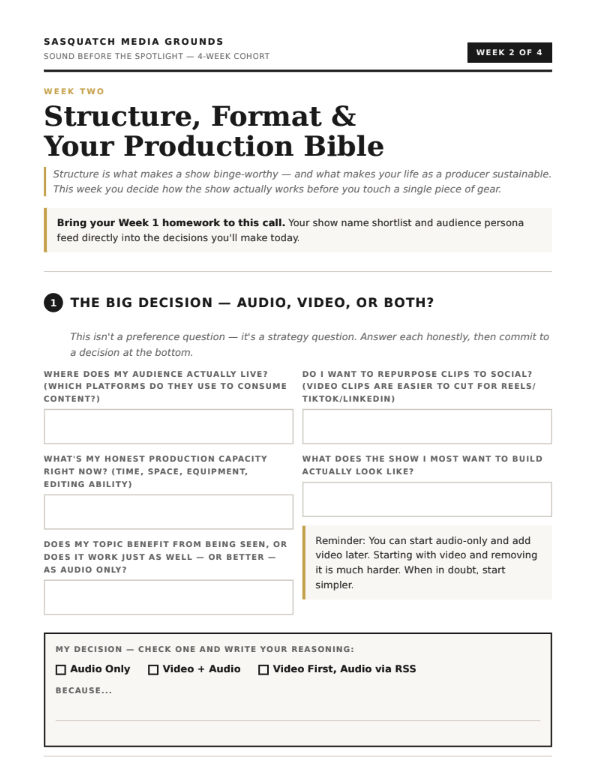
This time, she isn't waiting for someone else to carry production.
Megan is now recording a 20-episode first season designed for YouTube.
The platform choice is intentional.
YouTube gives her searchable, long-tail media that can introduce new audiences to both her personality and expertise long after publication.
Her guest strategy is intentional too.
Rather than simply inviting interesting people, Megan is prioritizing guests with larger, complementary audiences... creating opportunities for organic discovery and relationship-building.
She's also adding solo episodes between interviews so new viewers don't only learn what her guests know.
They learn what Megan knows.
Megan is actively recording season one and will be launching her show in Q4 2026.
The outcome isn't that SMG can produce Megan's show.
It's that Megan learned how to build her own.
THE BEFORE + NOW
WHEN WE STARTED · Q4 2025
1 finished short story
<100 active email subscribers
~100 social followers
0 PDX Spellbound Instagram account
$0 product sales
0 paid story subscribers
A half-finished novel
A lot of ideas
No established commercial system
SEPTEMBER 2026
12-story recurring product built
925 email subscribers
300+ personal Instagram followers
100+ PDX Spellbound Instagram followers
10 recurring paid readers
5 vending workshop customers
Physical story products entering market testing
Crafty Wonderland holiday market acceptance
2027 vending education opportunity
New consulting work from increased visibility
Collaborative author education product in development
20-episode show in production
And a creator increasingly capable of deciding what happens next.
THIS IS NOT A VIRAL GROWTH STORY
GOOD.
Megan didn't start with 16,000 dormant YouTube subscribers.
She doesn't sell a subject engineered for shock, controversy, or instant curiosity.
She isn't trying to become famous for being famous.
Her ideal audience is quieter.
Softer.
Specific.
People who want cozy stories, thoughtful creative businesses, useful expertise, and spaces that feel good to spend time inside.
That means the job isn't getting everyone to pay attention.
It's making Megan visible enough that her people can find her.
You don't need everyone watching.
You need the right people to know you exist.
CASE STUDY UPDATED · SEPTEMBER 2026
This case isn't finished.
We still don't know whether PDX Spellbound's strongest story product will ultimately be digital, physical, or both.
We don't know the eventual ceiling of the paid subscription.
We don't know whether vending education will find its strongest market among individual authors or B2B buyers.
We don't know yet what the new show will do for Megan's audience growth.
The collaborative author workshop hasn't completed its pilot.
And several promising ideas are deliberately sitting on the not yet shelf.
That's what active development looks like.
Not pretending every experiment worked.
Not restarting every time one doesn't explode.
Building enough data signs to know what deserves more investment.
WHAT PDX SPELLBOUND TAUGHT US
Development compounds.
A year of small decisions doesn't look dramatic while you're making them.
Finish the stories.
Build the automation.
Send the email.
Post the video.
Join the community.
Pitch the podcast.
Test the workshop.
Watch what people buy.
Change the audience.
Try again.
“Megan! Take your sunglasses off for the damn selfie.”
And, “Megan! Take more selfies!”
One decision doesn't transform a creator.
But enough good decisions, made consistently and with enough runway to learn from them?
Eventually you're looking at a completely different business.
And sometimes...
a completely different creator.
Talent development isn't one breakthrough.
It's what happens when better decisions start becoming normal.
CURRENT CHAPTER
Megan is still building.
She's selling the stories.
Growing the list.
Testing physical products.
Preparing for holiday vending.
Developing education for other creators.
Collaborating inside the SMG ecosystem.
Recording her first independently developed show.
And becoming increasingly comfortable being seen while she does it.
The most important change may be the hardest one to put in a dashboard.
Megan no longer needs someone standing beside her before she'll participate.
She has systems.
She has judgment.
She has products.
She has experiments running.
She has people beginning to pay attention.
And when she needs strategic support, she has somewhere to bring the next question.
That's fractional talent management.
SITTING ON MORE THAN YOU KNOW WHAT TO DO WITH?
You probably don't need another random strategy session.
You may need someone who can stay close enough to your work to recognize the patterns, pressure-test the ideas, help you build the infrastructure, and stop you from abandoning something useful three weeks before you finally learn what it can do.
The Dojo is SMG's fractional talent-management container for founders and creators building the judgment, systems, audience, commercial strategy, and consistency required to turn good ideas into durable assets.
Already know what you're building and need a production partner?
TALK TO SMG →